
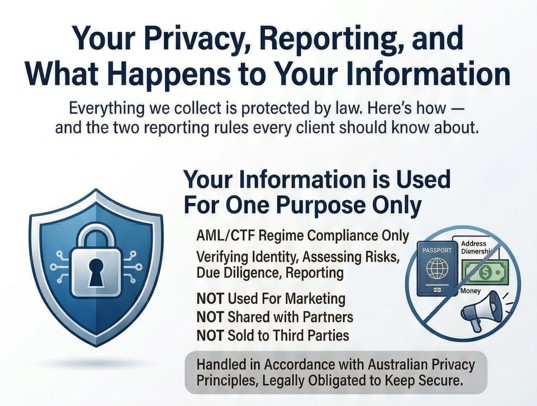
Everything we collect is protected by law. Here’s how — and the two reporting rules every client should know about.
When someone asks you for your passport, your residential address, your ownership details, and an explanation of where your money comes from, it’s natural to wonder: what happens to all of this information?
It’s a fair question, and it deserves a clear answer.
Your information is used for one purpose only
Everything we collect under the AML/CTF regime is used strictly for compliance with our legal obligations. That means verifying your identity, assessing risks, conducting due diligence, and meeting reporting requirements.
It will not be used for marketing. It will not be shared with business partners or sold to third parties. It will not be used for any purpose beyond what the AML/CTF legislation specifically requires. Your information is handled in accordance with the Australian Privacy Principles, and we’re legally obligated to keep it secure.
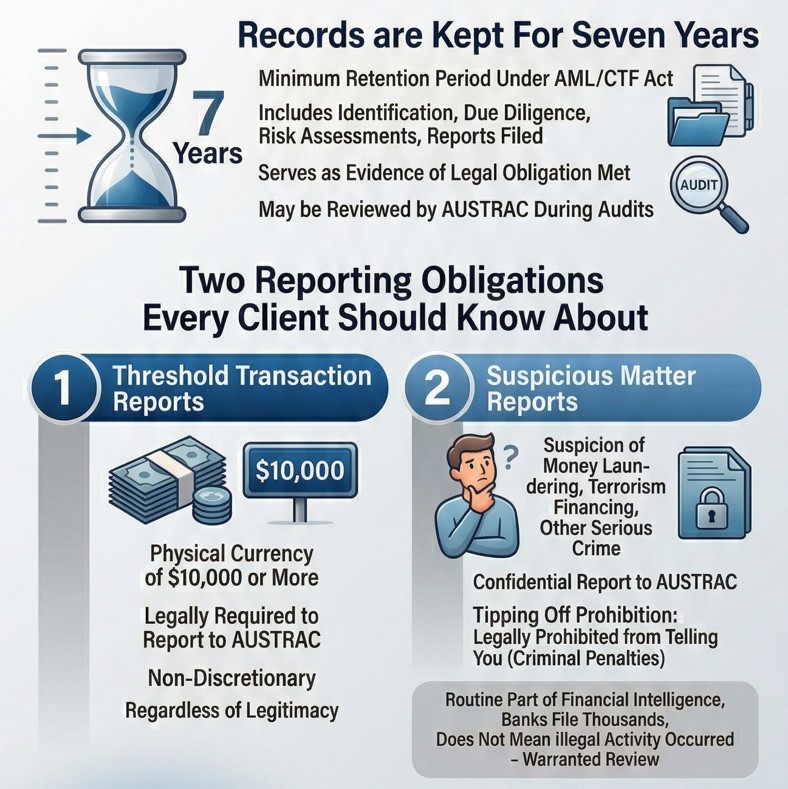
Records are kept for seven years
Under the AML/CTF Act, we must retain records of their compliance activities — including your identification documents, due diligence records, risk assessments, and any reports filed — for a minimum of seven years. These records serve as evidence that we’ve met their legal obligations, and they may be reviewed by AUSTRAC during audits.
Two reporting obligations every client should know about
Threshold Transaction Reports: If any transaction includes physical currency (actual cash) of $10,000 or more, we’re legally required to report it to AUSTRAC. This isn’t discretionary. It doesn’t matter whether the transaction is perfectly legitimate. If the threshold is met, the report must be filed.
Suspicious Matter Reports: If we form a suspicion that a transaction or activity may be related to money laundering, terrorism financing, or another serious crime, they must file a confidential report with AUSTRAC. The critical thing to understand is that we’re legally prohibited from telling you that a report has been filed. This is known as the “tipping off” prohibition, and it carries serious criminal penalties.
This isn’t something to be alarmed about. Suspicious matter reports are a routine part of the financial intelligence system. Banks file thousands of them every year. They don’t mean something illegal has occurred — they simply mean something warranted further review.
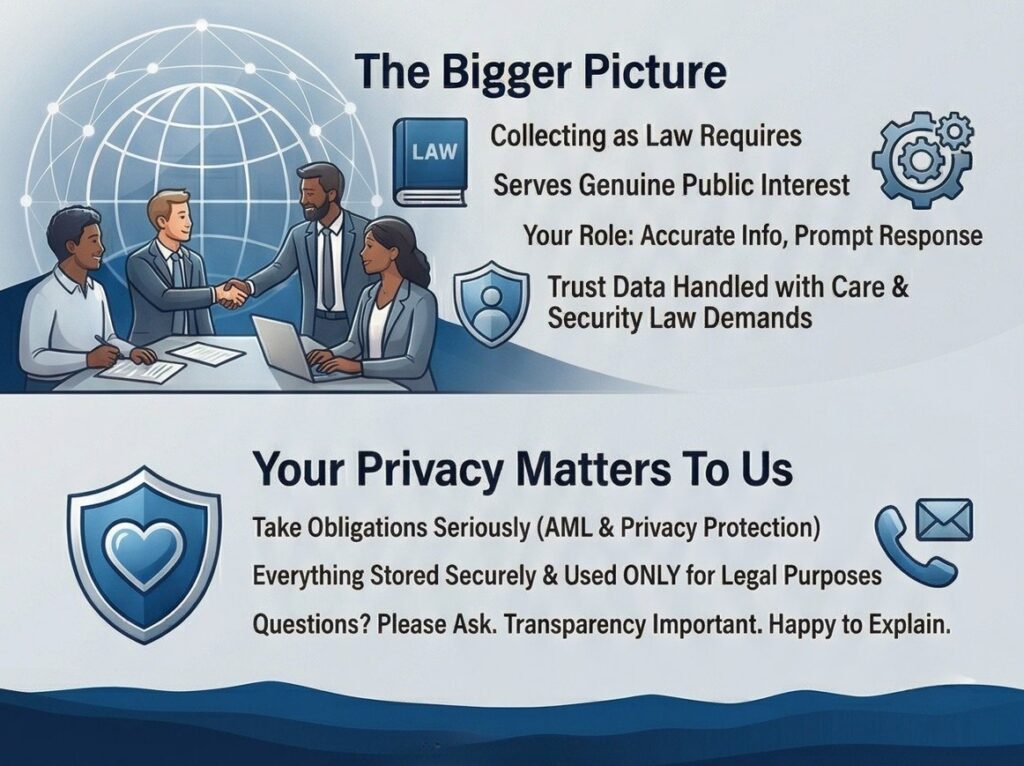
The bigger picture
We’ren’t collecting this information because they’re curious. They’re collecting it because the law requires them to, and because it serves a genuine public interest. Your role is small but important: provide accurate information when asked, respond to requests promptly, and trust that your data is being handled with the care and security the law demands.
Your Privacy Matters To Us
We take our obligations seriously — both the new AML requirements and the responsibility to protect your personal information. Everything we collect will be stored securely and used only for the purposes the law requires. If you ever have questions about how your information is being handled, please ask. Transparency is important to us, and we’re always happy to explain.