
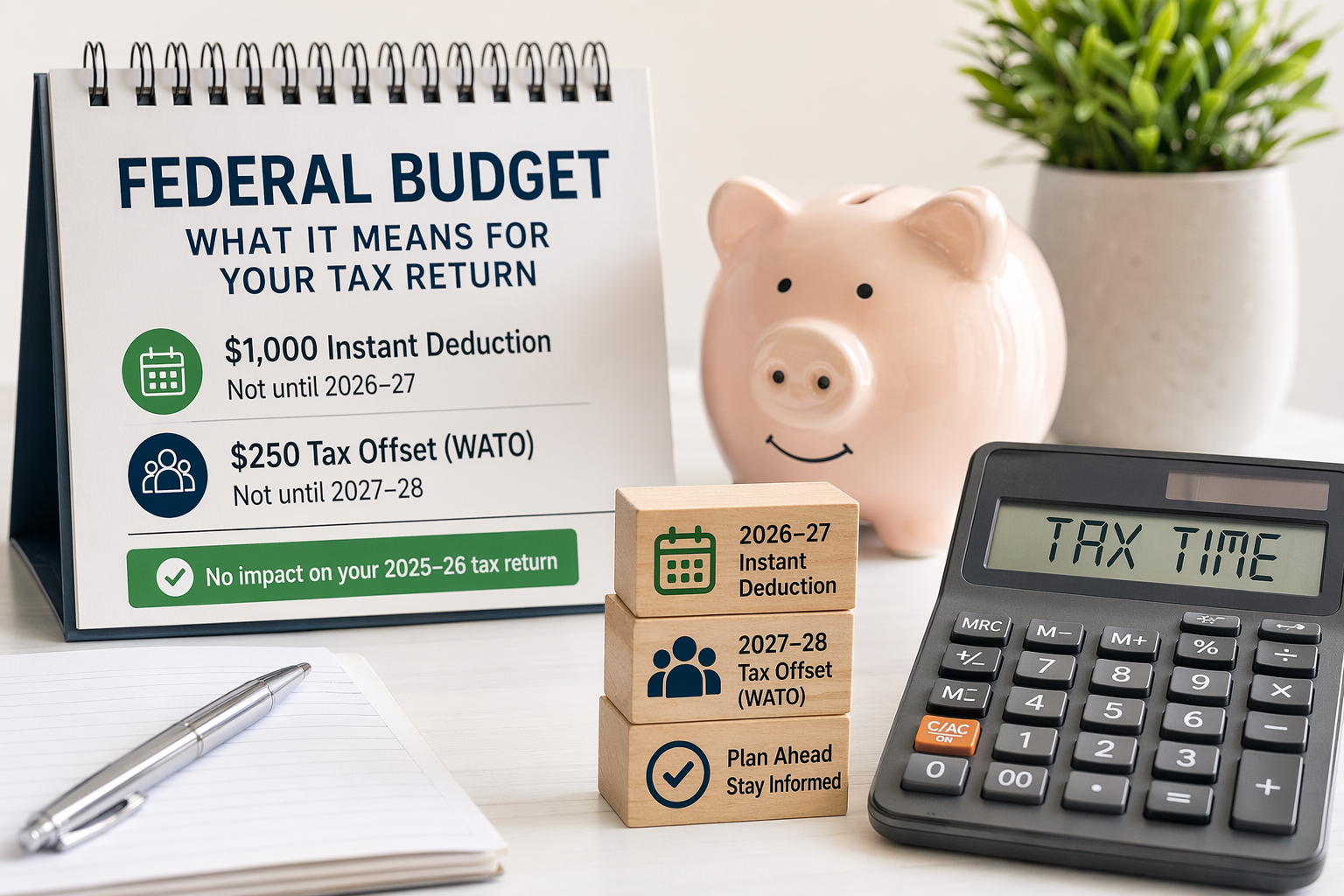
The Federal Government has been promoting several new measures aimed at supporting Australian workers following the recent Budget. These include a proposed $250 Working Australians Tax Offset (WATO) and a new “instant” tax deduction of up to $1,000.
However, it’s important to understand that these measures won’t result in an immediate $1,250 benefit in your upcoming tax return—and in many cases, they won’t apply just yet.
Key Point: These Changes Aren’t Law Yet
At this stage, both measures are still only proposals. They form part of a broader package of changes currently before Parliament, alongside proposed reforms to negative gearing and capital gains tax.
Until this legislation is passed, there is no impact on your current tax return (2025–26 year). Even if the legislation is approved before 30 June, these measures are not expected to apply until future income years.
Instant Tax Deduction – What It Really Means
The proposed $1,000 instant tax deduction is not scheduled to apply until the 2026–27 financial year.
Just as importantly, it’s not a $1,000 refund or bonus. It is simply a simplified deduction option for individuals with relatively low work-related expenses.
- It applies only where total work-related deductions are $1,000 or less
- It removes the need to keep detailed records for those smaller claims
- The actual tax benefit depends on your marginal tax rate
In practice:
- The average tax saving is expected to be around $205
- The maximum benefit is approximately $470, and only for higher-income earners
For clients with genuine deductions exceeding $1,000, the standard substantiation rules will still apply—and in fact, compliance requirements may become more stringent.
Key takeaway: If your expenses exceed $1,000, you will still need to fully document and substantiate your claims.
Record-Keeping Still Matters
With these changes not yet in effect, maintaining proper records remains critical.
The ATO continues to emphasise:
- Keeping receipts and supporting documentation
- Using tools such as apps or photo records for expenses
- Retaining records in case your claim exceeds the proposed threshold in future years
This is particularly important given the ongoing focus on substantiation and compliance.
$250 Tax Offset – Timing and Limitations
The proposed $250 Working Australians Tax Offset (WATO) is even further away, with a planned start date of the 2027–28 financial year.
A few important points to note:
- It applies to individuals earning labour income (including sole traders)
- It is not a cash payment
- It simply reduces the amount of tax payable
This means:
- If your taxable income is below the tax-free threshold, there is no benefit
- The offset will only reduce tax actually payable—it does not create a refund on its own
Practical Tax Timing Reminders
As we move toward year-end:
- The current financial year closes on 30 June 2026
- Tax returns can technically be lodged from 1 July
- However, the ATO recommends waiting until late July to ensure pre-fill data is complete (e.g. wages, interest, health insurance)
Lodging too early can increase the risk of errors and amendments.
Final Thoughts
While these Budget measures have generated a lot of attention, the practical impact for most taxpayers is still some time away.
For now, the focus should remain on:
- Accurate record-keeping
- Proper substantiation of deductions
- Ensuring your 2025–26 tax return reflects your actual position
As always, we’ll continue to monitor the progress of these measures and provide updates once the legislation is finalised.
Disclaimer: The information contained in this article is provided for general guidance only and does not constitute financial, taxation, legal, or other professional advice. While every effort has been made to ensure the accuracy and completeness of the information at the time of compilation, it may not address the specific circumstances, requirements, or objectives of you and/or your business.