
In today’s digital world, subscriptions have become a normal part of life. From streaming services and music apps to software licences and cloud storage, many of us sign up with the best intentions. The problem? We often forget about them.
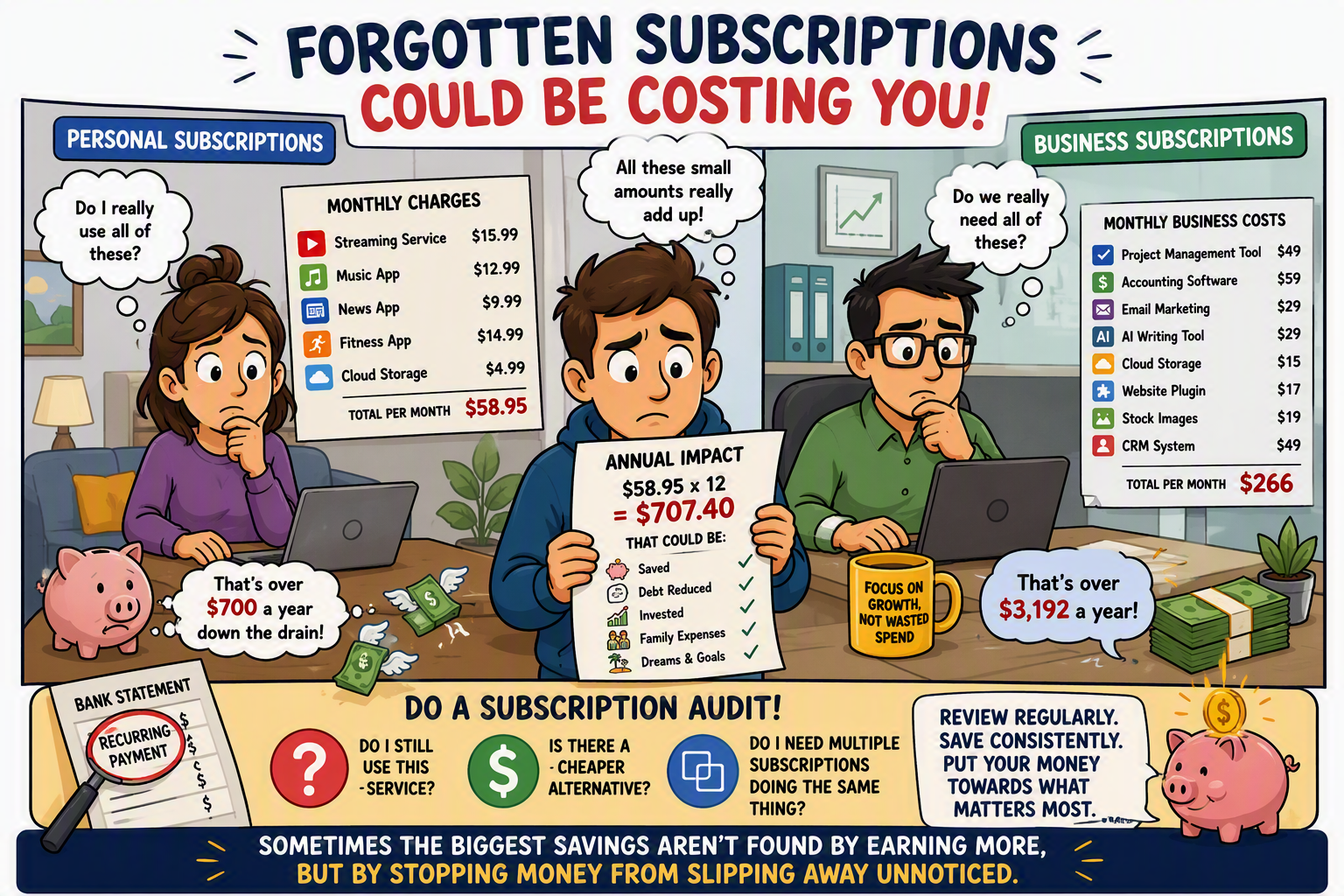
A subscription that costs just $15 per month may not seem significant, but over a year that’s $180. Have five forgotten subscriptions and you could be spending nearly $1,000 annually on services you barely use. For households already feeling the pressure of rising living costs, that money could be better directed towards savings, debt reduction, investing, or family expenses.
Businesses face a similar challenge. Small monthly software subscriptions for accounting tools, project management platforms, marketing services, AI tools, website plugins, and data storage can quietly accumulate over time. It’s not uncommon for businesses to discover they are paying for duplicated services, unused licences, or subscriptions that staff signed up for but no longer need. A seemingly harmless $49 monthly charge becomes almost $600 per year, and multiple subscriptions can quickly add up to thousands of dollars.
The good news is that identifying these expenses is relatively easy. Review your bank and credit card statements for the last three months and look for recurring payments. Ask yourself:
- Do I still use this service?
- Is there a cheaper alternative?
- Do I need multiple subscriptions providing similar functions?
A quick subscription audit can free up cash almost immediately. For both individuals and businesses, regularly reviewing recurring expenses is one of the simplest ways to improve cash flow and ensure your money is working towards your goals rather than quietly disappearing in the background.
Sometimes the biggest savings aren’t found by earning more, but by stopping money from slipping away unnoticed.
Disclaimer: The information contained in this article is provided for general guidance only and does not constitute financial, taxation, legal, or other professional advice. While every effort has been made to ensure the accuracy and completeness of the information at the time of compilation, it may not address the specific circumstances, requirements, or objectives of you and/or your business.